Widespread vs. Wall-Mount Bathroom Faucets: Which Is Best for Your Bathroom?
Choosing the right bathroom faucet is about more than appearance. The faucet you select affects your bathroom’s overall design, countertop space, installation requirements, cleaning routine, and everyday comfort. Two popular options for modern and luxury bathrooms are widespread bathroom faucets and wall-mount bathroom faucets. Both offer distinctive advantages, but they differ significantly in how they are installed and how they interact with your vanity, sink, and plumbing.
If you are comparing widespread vs. wall-mount bathroom faucets, understanding these differences will help you make a confident decision. Whether you are renovating a primary bathroom, designing a guest bath, or creating a sophisticated space with handcrafted brass fixtures, the right faucet should balance style, durability, functionality, and long-term value.
At Brassena, homeowners and design professionals can explore premium brass fixtures and bathroom products that complement a range of interior styles, from timeless traditional spaces to contemporary luxury bathrooms.
What Is a Widespread Bathroom Faucet?
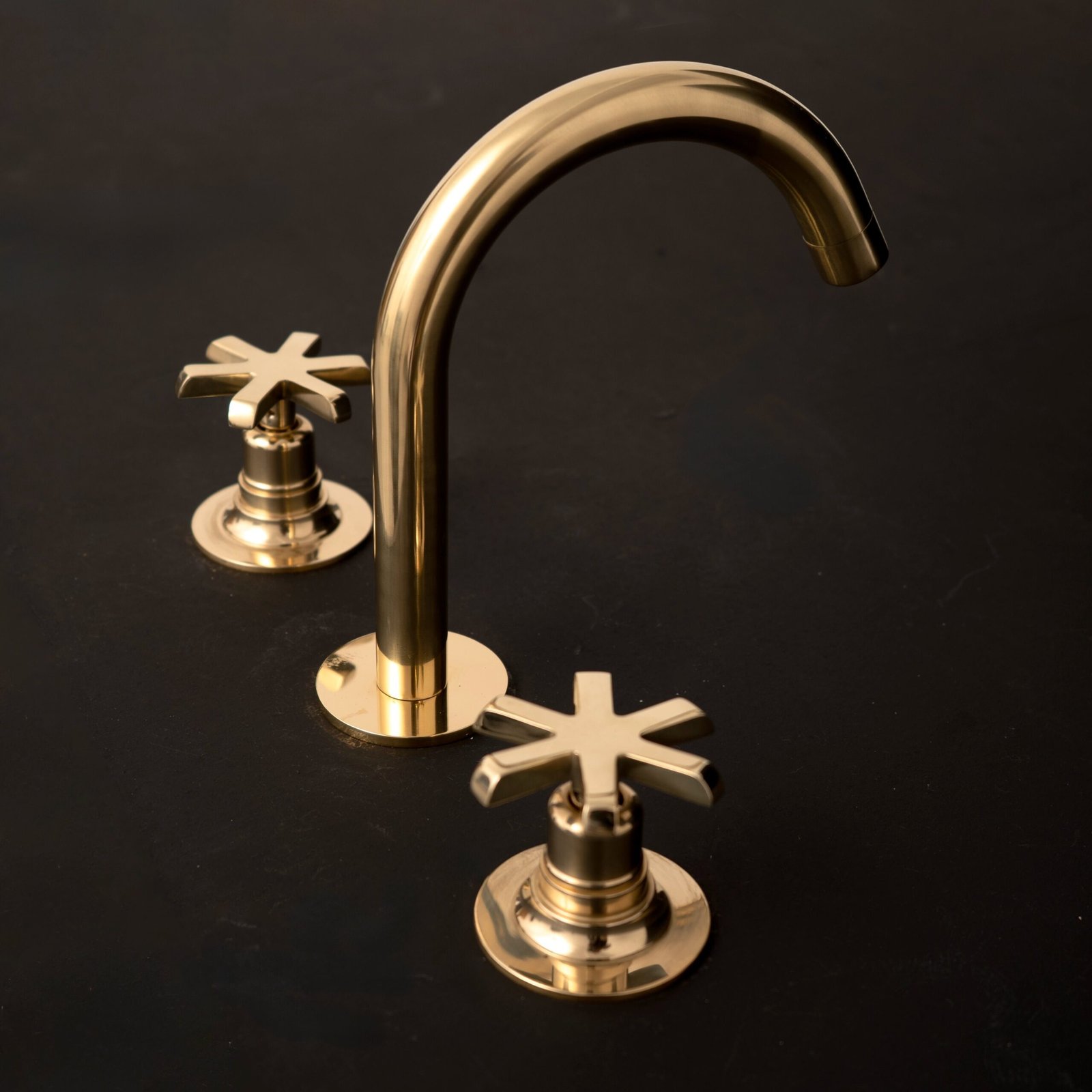
A widespread bathroom faucet is a three-piece faucet configuration featuring separate hot and cold handles and a central spout. Unlike a single-hole faucet, which combines the controls and spout into one compact unit, a widespread design gives each component its own mounting point.
The handles and spout are typically installed directly on the bathroom countertop or sink deck. The spacing between the components can vary according to the faucet model, sink configuration, and manufacturer’s installation specifications.
Widespread faucets are especially popular in upscale residential bathrooms because they create a balanced, symmetrical appearance. Their separate handles also make it possible to select designs with distinctive shapes, decorative detailing, and premium finishes.
Key Features of Widespread Faucets
- Three separate components: a hot handle, a cold handle, and a central spout.
- Deck-mounted installation on the countertop or sink.
- Flexible visual spacing within the manufacturer’s specified installation range.
- A wide selection of traditional, transitional, and contemporary designs.
- Compatibility with many bathroom vanities and sink configurations.
Widespread faucets work particularly well with double vanities, marble countertops, stone surfaces, and undermount sinks. They can also complement handcrafted brass accessories and traditional bathroom hardware.
For homeowners who appreciate decorative details, a widespread faucet offers an opportunity to make the sink area a central design feature.
What Is a Wall-Mount Bathroom Faucet?
A wall-mount bathroom faucet is installed through the wall above the sink rather than directly onto the countertop or sink deck. Its spout extends outward over the basin, while the water supply connections and valve assembly are typically concealed behind the finished wall.
This arrangement creates a streamlined appearance and leaves the countertop around the sink more open. With fewer fixtures occupying the vanity surface, the bathroom can feel cleaner, more spacious, and visually organized.
Wall-mount faucets are commonly used in contemporary bathrooms, minimalist interiors, vessel-sink installations, and custom vanity designs. However, they can also work beautifully in traditional bathrooms when paired with classic shapes and warm metallic finishes.
Key Features of Wall-Mount Faucets
- Installation through the wall above the sink.
- Concealed plumbing components for a cleaner appearance.
- More open countertop space around the basin.
- A distinctive architectural look.
- Compatibility with selected vessel sinks, undermount sinks, and countertop basins.
Wall-mounted installation requires careful planning. The faucet’s projection, mounting height, spout reach, and water flow must work with the sink dimensions to minimize splashing and provide comfortable handwashing space.
The plumbing and valve must also be installed at the correct location before the wall is finished. This makes wall-mount faucets particularly suitable for new construction and planned bathroom renovations.
Widespread vs. Wall-Mount Bathroom Faucets: The Main Differences
Although both styles can create an elegant bathroom, their installation methods and practical benefits are different.
| Feature | Widespread Faucet | Wall-Mount Faucet |
|---|---|---|
| Installation | On the countertop or sink deck | Through the wall |
| Handles | Usually two separate handles | Depends on the faucet design |
| Countertop space | Occupies part of the deck | Leaves more deck space open |
| Plumbing access | Often easier to access beneath the sink | May require access behind the wall |
| Installation complexity | Generally more straightforward | Requires careful wall and valve planning |
| Design style | Traditional, transitional, contemporary | Contemporary, minimalist, architectural |
| Cleaning | Requires cleaning around deck-mounted components | Makes wiping the countertop easier |
| Renovation suitability | Often easier for existing deck-mounted setups | Best when wall plumbing can be planned or modified |
The best choice depends on your existing plumbing, sink dimensions, renovation budget, and preferred interior design.
A widespread faucet may be the more practical solution when you want an elegant upgrade without major plumbing changes. A wall-mount faucet may be ideal when you want a clean, architectural look and can coordinate the plumbing with your renovation.
1. Design and Aesthetic Appeal
Appearance is one of the biggest considerations when comparing widespread vs. wall-mount bathroom faucets.
The Timeless Appeal of Widespread Faucets
Widespread faucets create a familiar, balanced arrangement. The separate handles frame the central spout, giving the sink area a deliberate and symmetrical appearance.
This style is particularly effective in traditional bathrooms, transitional interiors, and luxury spaces that incorporate natural materials. Think marble countertops, decorative mirrors, warm lighting, classic cabinetry, and brushed or unlacquered brass hardware.
A widespread brass bathroom faucet can introduce warmth and character without overwhelming the rest of the room. It can also coordinate with cabinet pulls, towel bars, shower fixtures, and other bathroom accessories.
The Architectural Look of Wall-Mount Faucets
Wall-mount faucets emphasize simplicity and clean lines. Because the faucet emerges from the wall, the sink area can appear less crowded.
This style pairs naturally with floating vanities, large-format wall tiles, concrete finishes, natural stone, and minimalist bathroom furniture. It can also create a striking contrast when installed against textured tile or a carefully selected stone backsplash.
A wall-mount faucet with a warm brass finish can soften a contemporary bathroom while maintaining its streamlined appearance.
Design tip: Choose the mounting style based on the entire sink area rather than the faucet alone. The vanity, mirror, backsplash, sink shape, and lighting should work together to create a cohesive result.
2. Installation and Plumbing Requirements
Installation is one of the most important practical differences between these faucet types.
Installing a Widespread Bathroom Faucet
Widespread faucets are generally installed through three separate openings in the countertop or sink deck. The hot and cold handles connect to the central spout through the faucet’s supplied connections.
Before purchasing, measure the existing holes and check the faucet manufacturer’s required mounting dimensions. Widespread designs do not all use identical spacing, so confirm that your selected model is compatible with your sink.
For a replacement project, a widespread faucet can be a convenient option when the existing sink already has the appropriate three-hole configuration.
Installing a Wall-Mount Bathroom Faucet
Wall-mount faucets require a suitable mounting structure and correctly positioned plumbing connections behind the wall. The valve, water supplies, and mounting hardware must be installed according to the manufacturer’s specifications.
The finished wall also needs to accommodate the faucet’s mounting plate or trim, depending on the model.
If you are renovating an existing bathroom, installing a wall-mount faucet may involve opening the wall, relocating plumbing, reinforcing the mounting area, and repairing tile or other finishes.
These additional steps can increase labor costs. For this reason, wall-mount faucets are often easiest to incorporate during new construction or a full bathroom renovation.
Before installation, have a qualified plumber confirm the valve requirements, water connections, mounting height, and compatibility with the selected sink.
3. Countertop Space and Everyday Convenience
The sink area is one of the most frequently used parts of a bathroom. The faucet configuration can influence how comfortable and convenient it feels.
Widespread faucets occupy some of the countertop or sink deck. Although the arrangement can look elegant, it creates additional surfaces around the handles and spout that need regular cleaning.
Wall-mount faucets keep the faucet assembly off the countertop. This provides more open space for soap dispensers, hand towels, decorative accessories, and everyday essentials.
A wall-mounted design can also make it easier to wipe water and toothpaste residue from the vanity surface.
However, the faucet must be positioned carefully. If the spout is too short, water may fall close to the back of the basin. If the mounting height or angle is unsuitable, splashing can become a problem.
For a vessel sink, pay particular attention to the combined height of the sink and faucet. The water stream should reach a useful position inside the basin without creating unnecessary splashes.
4. Cleaning and Maintenance
Both faucet styles can be easy to maintain when installed correctly, but their cleaning routines differ.
Maintaining Widespread Faucets
Widespread faucets have multiple deck-mounted components. Water, soap, and mineral deposits can collect around the base of the spout and handles.
Regularly wipe these areas with a soft cloth. Use a mild cleaner approved for the faucet’s finish, and avoid abrasive pads or harsh chemicals that may damage the surface.
If your bathroom has hard water, drying the faucet after use can help reduce mineral spotting.
Maintaining Wall-Mount Faucets
Wall-mount faucets simplify countertop cleaning because the faucet does not sit on the vanity surface. You can wipe beneath the spout without working around a central base or separate handles.
Nevertheless, the wall area surrounding the faucet needs attention. Water splashes may leave deposits on tile, stone, grout, or the backsplash.
The faucet’s finish also matters. Unlacquered brass, for example, develops a natural patina as it reacts with air, moisture, and everyday use. This evolving appearance is part of its appeal, but it may not suit homeowners who want a consistently polished surface.
For a deeper look at this material, read Brassena’s guide to unlacquered brass faucets, patina, and maintenance.
Is Brass a Good Material for Bathroom Faucets?
Brass is widely used in quality plumbing fixtures because it can offer durability, corrosion resistance, and a substantial feel when properly manufactured and maintained.
However, the word “brass” alone does not guarantee that a faucet is made entirely from solid brass. Some products use brass components, while others feature a different base material with a brass-colored finish.
Review the manufacturer’s specifications to understand the faucet’s body material, internal components, finish, and warranty.
For a more informed purchase, explore Brassena’s brass faucet collection and compare product details before selecting a style for your bathroom.
5. Cost and Long-Term Value
The total cost of a bathroom faucet includes more than the price displayed on a product page. Installation labor, plumbing modifications, countertop preparation, wall repairs, and long-term maintenance can all affect your budget.
Widespread Faucet Costs
A widespread faucet may be a cost-effective option when your sink already has compatible mounting holes and your water connections are in the correct location. Installation is often simpler than adding a new wall-mounted configuration, although the complexity depends on the existing setup.
Premium finishes, solid brass construction, distinctive handle designs, and decorative details can increase the purchase price.
Wall-Mount Faucet Costs
Wall-mount faucets can involve additional installation expenses, particularly when a finished wall must be opened or plumbing must be relocated. Tile replacement and access to concealed valves may also increase the overall project cost.
However, for a bathroom renovation that already includes new plumbing and wall finishes, the additional work may be easier to accommodate.
When comparing prices, consider the complete installed cost rather than the faucet alone. A well-made fixture with suitable replacement parts and a reliable warranty may provide better long-term value than a cheaper product that does not meet your needs.
6. Which Faucet Is Best for Different Bathroom Styles?
The ideal choice depends on the look you want to achieve and the practical requirements of your space.
- Traditional bathrooms: Widespread faucets with classic handles and warm brass finishes complement detailed cabinetry, marble surfaces, and decorative mirrors.
- Modern bathrooms: Wall-mount faucets create clean lines and a minimalist appearance, particularly when paired with floating vanities.
- Luxury bathrooms: Either style can work beautifully. Choose based on the relationship between the sink, countertop, fixtures, and overall design.
- Small bathrooms: Wall-mount faucets can free up countertop space, provided the basin and faucet dimensions are compatible.
- Guest bathrooms: A widespread faucet offers a familiar, versatile configuration, while a wall-mount option can create a distinctive design feature.
- Vessel-sink bathrooms: Wall-mount faucets are a popular option because they can be positioned above the vessel, but the faucet’s reach and height must match the sink.
- Bathroom renovations: Widespread faucets may be easier to install when existing deck holes are compatible with the new fixture.
For a coordinated look, explore Brassena’s premium bathroom faucets and fixtures and select finishes that complement your vanity, lighting, and other bathroom hardware.
7. How to Choose the Right Bathroom Faucet for Your Home
Before choosing between widespread and wall-mount bathroom faucets, consider these six factors.
Measure Your Sink and Vanity
Measure the sink’s width, depth, and height, along with the available countertop space. For a widespread faucet, check the number of mounting holes and the required distance between the handles.
For a wall-mount faucet, measure the distance from the wall to the basin and determine where the water stream should land.
Check Plumbing Compatibility
Identify your existing water connections and whether the project requires new plumbing. Confirm the faucet’s valve requirements and installation instructions before purchasing.
Consider Water Flow and Splashing
The spout should direct water toward a practical area of the basin. A faucet that is too short or positioned too high can cause splashing, while insufficient clearance can make handwashing uncomfortable.
Select a Suitable Material and Finish
Choose a finish that suits your bathroom’s design and maintenance preferences. Solid brass fixtures, when specified accurately, can be an excellent choice for homeowners seeking a substantial material and timeless appearance.
Compare polished brass, brushed brass, and unlacquered brass according to the look you want and the care each finish requires.
Set Your Complete Budget
Include the faucet, installation, plumbing work, wall or countertop modifications, and any necessary accessories. If you are renovating several bathrooms, consistency between finishes can also influence your purchasing decisions.
Think About Future Maintenance
Consider whether replacement parts are available, how easily the faucet can be serviced, and whether concealed plumbing will be accessible if repairs become necessary.
A qualified plumber can help you evaluate these details before installation.
8. Common Mistakes to Avoid
Even an attractive faucet can disappoint if the installation or selection is poorly planned.
Ignoring sink compatibility: Do not purchase a widespread faucet without checking hole spacing and countertop thickness. Likewise, confirm that a wall-mount faucet can be installed at the required height and projection.
Choosing appearance over function: A faucet should look good, but it must also provide comfortable access to the water stream and sufficient clearance for everyday use.
Underestimating renovation costs: Wall-mounted fixtures may require additional plumbing and wall finishing. Include these expenses in your budget before making a final decision.
Mixing incompatible finishes: Different brass finishes can have noticeably different colors and levels of sheen. Coordinate the faucet with your other bathroom hardware rather than assuming every brass product will match.
Neglecting installation instructions: Follow the manufacturer’s specifications for mounting, connections, and maintenance. Incorrect installation can lead to leaks, splashing, or premature wear.
Avoiding these mistakes makes it easier to choose a faucet that performs well and supports the design of your bathroom for years to come.
Frequently Asked Questions
1. Is a widespread or wall-mount bathroom faucet better?
Neither is universally better. Widespread faucets are versatile and often easier to install in bathrooms with compatible three-hole sinks. Wall-mount faucets offer a streamlined appearance and keep the countertop more open. Your plumbing, sink design, and budget should determine the best option.
2. Are wall-mount bathroom faucets harder to install?
Generally, yes. Wall-mount faucets require correctly positioned plumbing and valve assemblies behind the wall. Installation can be more involved when modifying an existing bathroom, particularly if finished tile must be removed.
3. Can I replace a widespread faucet with a wall-mount faucet?
Yes, but it is not usually a direct replacement. The wall may need new plumbing connections, and the existing countertop holes may need to be filled or concealed. Consult a qualified plumber and countertop professional before starting the conversion.
4. Are widespread faucets suitable for modern bathrooms?
Absolutely. Although widespread faucets are associated with traditional designs, contemporary models with geometric spouts, minimalist handles, and refined finishes can complement modern interiors.
5. Do wall-mount faucets save countertop space?
Yes. Because the faucet is attached to the wall, it leaves more of the vanity surface available for cleaning and everyday essentials. However, the wall-mounted configuration still needs sufficient clearance around the sink.
6. What is the best faucet material for a luxury bathroom?
Solid brass is a popular option for premium bathroom fixtures because of its durability and substantial feel. Always verify the manufacturer’s material specifications, since a brass-colored finish does not necessarily mean the entire faucet is made from solid brass.
7. Are unlacquered brass faucets a good choice?
Unlacquered brass can be an excellent choice for homeowners who appreciate natural materials and evolving finishes. It develops a patina over time, giving the fixture a distinctive appearance. If you prefer a uniform finish, consider a different brass finish with care requirements suited to your preferences.
8. How do I prevent splashing with a wall-mount faucet?
Choose a spout with sufficient reach and position it so the water lands in a suitable area of the basin. The correct mounting height depends on the sink’s dimensions and the faucet manufacturer’s instructions. Test the proposed configuration before completing the wall whenever possible.
9. Which faucet style is best for a vessel sink?
Both configurations can work, depending on the vessel’s shape and installation requirements. A wall-mount faucet can create an elegant, uncluttered appearance, while a compatible deck-mounted widespread faucet may suit certain vessel designs. Confirm the spout height, reach, and water trajectory before purchasing.
10. Where can I find premium brass bathroom faucets?
Visit Brassena to explore premium brass faucets and bathroom fixtures. Review the available product specifications, installation requirements, materials, and finishes to identify options that suit your project.
Final Verdict: Widespread vs. Wall-Mount Bathroom Faucets
When comparing widespread vs. wall-mount bathroom faucets, the right choice comes down to your priorities.
Choose a widespread bathroom faucet if you prefer a classic, versatile design, separate handles, and a deck-mounted configuration that may work with your existing sink.
Choose a wall-mount bathroom faucet if you want an architectural focal point, a cleaner countertop, and a minimalist appearance—and you can accommodate the necessary wall plumbing.
Both styles can deliver an elegant result when their dimensions, materials, and finishes are carefully selected.
For homeowners designing a refined bathroom with premium materials, Brassena offers a starting point for exploring brass faucets and complementary fixtures. Visit Brassena.com to discover options for creating a bathroom that balances style, practicality, and lasting appeal.
The best faucet is not simply the one that looks most impressive in a photograph. It is the one that fits your sink, suits your lifestyle, works with your plumbing, and complements your bathroom design.
- Tags: bathroom wall faucet, brass wall mount bathroom faucet, luxury wall mounted bathroom faucet, modern wall mount bathroom faucet, solid brass wall mount faucet, unlacquered brass wall mount faucet, wall mount bathroom faucet, wall mount bathroom faucets, wall mount faucet for vessel sink, wall mount sink faucet, wall mount widespread bathroom faucet, wall mounted bathroom faucet, wall mounted bathroom faucet with handles, wall mounted faucet for bathroom sink, wall mounted vanity faucet
Blog
Get fresh home inspiration and helpful tips from our interior designers